


SIN
Trelawny Tragedy: Man Kills Two Children, Hangs Self
Published: Tuesday February 26, 2013 | 8:22 am3 Comments
WESTERN BUREAU:
The community of Wait-a-bit in Trelawny woke up to shocking news this morning that a man earlier slit the throats of two children then hanged himself at their home.
The police say the incident happened around 2.30 this morning.
The man is said to be the father of the two children aged between two and five years old.
Our sources say only yesterday the man had a dispute with the children’s mother, who later packed up and left the home saying she was going back to her mother’s house in Coleyville, Manchester.
It is reported that the man went to Coleyville and tried to persuade the woman to return home.
However she refused.
He then went back to Trelawny and committed the double murder-suicide.
READ READ READ

We must never give-up the fight for reparation
Message Body:
Latest News:
World’s fastest man has a French connection
Sickle cell ignorance slammed
Slavery payouts fuel reparations debate
The institutions and ordinary people who benefitted from slave trade revealed in UCL study
Written by Elizabeth Pears
26/02/2013 12:04 PM
WEALTH: The Bank of England grew rich because of slavery
THE EXTENT to which some of Britain’s wealthiest families profited from the exploitation of enslaved Africans has been made public for the first time.
Historians from University College London (UCL) spent three years compiling the database, which exposes individuals and companies who made a fortune from the Empire’s dark past.
The Legacies of British slave-ownership project, funded by the Economic and Social Research Council (ESRC), breaks down a £20million sum of taxpayer money paid to slave-owners in compensation for the loss of their ‘property’, when slavery was made illegal in 1834. The sum represented 40 per cent of the Government’s annual spend and would be worth £16.bn by today’s standards.
Project leader, Professor Catherine Hall, told The Voice: “We want to put slavery properly back into British history. It’s a time associated with shame and there’s a real reluctance to talk about it.”
Compensation was paid, Hall explained, to get the powerful slave-owners, a strong interest group with representation in both the House of Commons and House of Lords, to agree to the Emancipation Act.
She added: “It had long been accepted that if the government took ‘private property’ then it should be compensated as they would do with docks or railways.
“The irony of that is that the whole moral argument for abolition was that people should not be property, so the £20 million goes right against the case people had been making. Radical abolitionists were opposed to it but in the end it was the only way to get the legislation through.”
Hall said that it was clear that historians from 1808 onwards, following the 1807 Slave Trade Act, were already focussing their writing on abolition as the story that should be told.
“The focus on our project is slave ownership,” said Hall. “It’s specifically about the Britons who were involved and who brought the profits back here. We think that’s something British people ought to know about. We are also returning to Eric Williams’ [first prime minister of Trinidad and Tobago] argument about the link between capitalism and slavery. Our findings absolutely confirm and extend the arguments that Williams makes.”
Williams argued in the 1940s that the abolition of the Atlantic slave trade in 1807 was motivated primarily by economics not morality.
Despite the huge compensations paid to former slave owners, the freed slaves received nothing. Most were forced to work as apprentices to ‘earn’ their keep.
Activists have long been calling for the British Government to accept their role in slavery through meaningful amends.
Hall said that “proper evidence that is properly accessible about the scale of the money that came in” could form an important aspect of the reparations argument.”
However, activists wanted to make clear that compensation did not necessarily mean financial payments.
“Reparations to rigidly locked into financial compensation; that undermines the ethics of the whole situation. However, despite David Cameron’s recent comments about colonialism having some good sides, Britain owes Africa and her children across the diaspora an immeasurable debt that still has not been repaid,” said Toyin Agbetu, founder of Pan-African human rights organisation Ligali.
Esther Stansford-Xosei, co-vice chair of the Pan-African Reparations Coalition in Europe, said: “The economic disempowerment is very real for the descendants of the enslaved in terms of the lives we lead in Britain today.”
The experienced reparations activist, who is undertaking a PhD in the history of the movement in the UK, added: “It’s problematic to just see reparations as money, it’s much broader than that. Reparations comes from the Latin word which means ‘to repair the damage.
“People of African descent have been harmed and continued to be harmed by the legacy of slavery even within our own personal families. You see it in street violence, and in inequalities in health, education and the criminal justice system. There is a real need for internal cohesion. Despite being fractured by history, the best way to get this taken seriously is for the community to show a united front”.
Five strands of reparations based on 1995 UN Framework for Reparations
1. Restitution: to put a people or group in the position they would be in had slavery/colonialism not happened relating to property, land and restoring dignity
2. Compensation: for loss of income, damage to reputation and loss of trading rights with regard to economic activity
3. Rehabilitation: social welfare and legal support a community which has experienced historical disadvantage need
4. Satisfaction: initiatives like memorial days, changing the curriculum
5. Guarantees of non-repetition: a commitment it will never happen again
***
The database is available online at www.ucl.ac.uk/lbs
Posted on: 26/02/2013 12:04 PM
WHA REALLY A GWAAN?
Ex-soldier accused of deadly rampage on wife, in-laws in Clarendon
Mayhem! Father-in-law says he was attacked by ex-soldier
BY KIMMO MATTHEWS Observer staff reporter [email protected]
Tuesday, February 26, 2013
THE Clarendon police were last night searching for ex-Jamaica Defence Force soldier Wilbert Pryce who Sunday night allegedly shot dead his mother-in-law, injured his wife and mother of his two children in Bryan’s Hill, then went to a nearby community where he was accused of raping a woman.
According to the police, the shootings and rape were the latest in a series of attacks carried out by the former soldier, who was two years ago released from prison where he served a three-year sentence for abusing his wife, Tamara Pryce, who it appeared was the main target of his attack on Sunday.
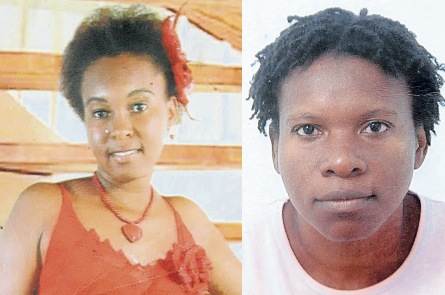
Tamara Pryce (at left), who was shot and injured allegedly by her estranged husband Wilbert Pryce Sunday night in Bryan’s Hill, Clarendon. (Inset) her mother Maxine Fearon, 45, who was killed in the attack. (Photos: Bryan Cummings)
1/4
Tamara Pryce, who was shot multiple times, was last night in hospital in serious condition.
Police said the ex-soldier’s mother-in-law, Maxine Fearon, a 45-year-old dressmaker and farmer, was at home on Sunday night with her daughter and other family members when Pryce drove up to the house about 9:45.
“Reports we received are that he went to the house and started to shout that he wanted to see his estranged wife,” one police investigator told Jamaica Observer yesterday.
The policeman said the former army man, who apparently became angry when his estranged wife did not come outside to see him, forced his way into the house, after which explosions were heard.
“Reports we received are that he went into the house and opened fire, hitting Fearon, the mother of his wife, who died on the spot,” said another investigator. He added that Tamara, in an attempt to escape, ran to a nearby bar where several residents of the community were having a drink.
“A sit me sit down and hear the screams and see when the man run down the woman all the way from her house over to the bar,” a resident alleged. The woman, he said, was then shot several times.
“Him run her down [and] shoot her as she entered the bar, and that was when she jumped over the bar counter and tried to escape, and that was when him come over her and shoot her again and cuss a bad word (expletive) and walk away,” said another resident, who claimed to have witnessed the shooting.
Glen Fearon, husband of the slain woman, said he had just arrived from work and parked his motor car when he heard the former soldier threatening members of his family.
“When I bend down and look into the yard me see the man a walk around the yard with a gun in him hand and him a beat down the grille to the house,” he added
Trembling with fear, Fearon said he made a desperate call to the police, but after more than one hour of trying to get help, he became frustrated and decided to venture to the home.
“I waited for a while, and then it look as if he left, and me start to walk down to the yard,” Fearon said, adding that he, too, was attacked by the former soldier.
“While I was walking to the house, him come around, and me and him start to struggle, and him use the gun to hit me in the head,” Fearon said, pointing to a bandage on his head. “While I was running me hear several shots. All me a
run me no know what was happening,” said the obviously shaken Fearon, who told the Observer that he rushed to the Chapleton Police Station.
Bleeding and worrying for his life, Fearon said he was left disappointed with the response from the police, as they told him to go to the hospital but allegedly asked nothing about the incident.
A brother of the slain woman, who is also a member of the police force, said he was at work when he received a call from his sister that she was being attacked.
He said that he made a desperate attempt to alert police in the area and tried to get to the house.
“She called me on the phone and told me that he was outside. While she was talking to me I heard her scream out for help,” said the policeman.
Yesterday, police investigators said they received reports that Pryce, after fleeing the community, went to another area where he was accused of raping a woman.
Read more: http://www.jamaicaobserver.com/news/Mayhem_13729035#ixzz2M4IS3bZT
WTF AFRICA- MAN FELL ASLEEP AFTER GOOD ROUND FROM PROSTITUTE

– Drama unraveled at Nairobi’s Parklands area after a man who is a happy events’ organizer was attacked by twilight girls taking off with his wallet and pants.
According to sources, the events’ organizer cum film maker who is popular in Mombasa and Nairobi wanted a quick s*xual satisfaction and went to the area which is infested by prostitutes.
After negotiating with a bootylicious girl, he settled for a quickie worth Sh. 2,000. The two ended up at the back of his car where the illicit affair happened but after s*xual satisfaction the man blacked out.
Half an hour lapsed as the man slept peacefully and when he woke up he was caught in shock as tens of twilight girls surrounded him laughing at his nudity. The girl, his wallet and neither his trousers were anywhere to be seen.

****RULES**** 1. Debates and rebuttals are allowed but disrespectful curse-outs will prompt immediate BAN 2. Children are never to be discussed in a negative way 3. Personal information eg. workplace, status, home address are never to be posted in comments. 4. All are welcome but please exercise discretion when posting your comments , do not say anything about someone you wouldnt like to be said about you. 5. Do not deliberately LIE on someone here or send in any information based on your own personal vendetta. 6. If your picture was taken from a prio site eg. fimiyaad etc and posted on JMG, you cannot request its removal. 7. If you dont like this forum, please do not whine and wear us out, do yourself the favor of closing the screen- Thanks! . To send in a story send your email to :- [email protected]
Recent Comments