
SPEAKING IN TONGUES- WHY DOES GOD SAY TO DO IT
What is Speaking in Tongues and why does God say in 1 Corinthians 14:5 that He would like each Christian to do it?
No doubt that is a question that has been asked by millions of Christians throughout the centuries, and we believe that knowing the answer is vital for maximizing the quality of one’s life as a follower of the Lord Jesus Christ. Why? The primary reason, as a study of Scripture will clearly show, is: speaking in tongues is the only absolute proof a Christian has that he is born again and guaranteed a parking place in Paradise, i.e., everlasting life (2 Cor. 1:21, 22; Eph. 1:13, 14; 1 John 3:24). Speaking in tongues is the only valid external, tangible evidence in the senses realm that the internal, intangible gift of holy spirit was shed abroad in one’s heart at the moment of his new birth.
Please do not hear me saying that you must speak in tongues in order to be born again. No, anyone who adheres to Romans 10:9 is saved, permanently. Why? Because at that moment he is “born again of incorruptible seed” (1 Pet. 1:23). But, as we will see, speaking in tongues is the vitally important proof that you are forever a child of God.
The second most important thing about speaking in tongues is that it vividly illustrates to the believer the most basic principle of the Christian walk, which is trusting the Word of our heavenly Father.
Beyond that, speaking in tongues is a beautiful way to circumvent the limited vocabulary of our native tongue and tell our Father that we love Him. It is a way to perfectly worship (Phil. 3:3) and praise (1 Cor. 14:16) the Creator, to give thanks well (1 Cor. 14:17), to speak the wonderful works of God (Acts 2:11), to magnify Him (Acts 10:46), to edify yourself (1 Cor. 14:4) and to build yourself up in faith (Jude 20). And if you have never done it, I will help you do so via this article and the video at the end of this article.
In this relatively brief piece, I cannot set forth the biblical background for every statement I make about the new birth, the gift of holy spirit, speaking in tongues, but we do just that in a number of relevant books and teaching tapes. My goal is to arrest your attention (or at least skirmish with it) to the end that you choose to dig deeper into our work on this critical subject. Although the phrase is over used, this is one subject that just might “change your life.”
As with many important biblical issues, an understanding of speaking in tongues relates specifically to an understanding of the administrations in Scripture. Unless we understand what parts of God’s Word are written to Jews, what parts are written to Gentiles, and what parts are written to Christians, we can neither understand nor apply its truths in our daily lives. For an overview of which parts of the Bible are written to you, click here!
We are currently living in what the Bible calls the Administration of the Sacred Secret (Eph. 3:9), which began on the Day of Pentecost (Acts 2:1ff) and will conclude with the gathering together of the Church (all living and dead Christians) to meet the Lord in the air (1 Thess. 4:13-18). Unique to this administration is the salvation a person attains by adhering to Romans 10:9—confessing with his mouth “Jesus is Lord” and believing in his heart that God raised him from the dead. At that moment he is “born again of incorruptible seed” (1 Pet. 1:23) and baptized/filled with the gift of holy spirit (Acts 1:5; 2:38). As the Word says of each Christian, God has “anointed us, set his seal of ownership on us, and put his spirit in our hearts as a deposit, guaranteeing what is to come” (2 Cor. 1:22). Amen!
And you may say: “Great! Uh, how do we know?”
Some would reply: “Well, because God says so.”
“Yes, but I didn’t feel anything happen when I got saved, and the next day I smoked, drank whiskey, cursed, and cheated at miniature golf. So how do I know for sure that the holy spirit of God is permanently within me? Are there any evidences in the senses realm, the realm where I’ve lived from birth and to which I am almost completely attuned?”
And I say: “Evidences? You mean like something you can see, hear, touch, taste or smell?”
“Yep.”
You’re in luck, because speaking in tongues is one of the nine “manifestations” (1 Cor. 12:7) of the gift of holy spirit. The word “manifestation” comes from two Latin words, manus, meaning “hand,” and festare, meaning “to touch.” It refers to something concrete and tangible. The gift of holy spirit each person receives when he gets born again is not tangible, because it is spirit, something not in the realm of the five senses. That’s why Scripture does not promise that one will feel anything when he gets born again. And that is why God has provided indisputable proof that something did happen, something so indescribably miraculous that there can be “no ifs, ands, or buts about it!”
This principle of tangible evidence in the senses realm is clearly illustrated in Matthew 9:1-8, which I will paraphrase: Some people brought to Jesus a paralyzed man, and Jesus said to him, “Cheer up, your sins are forgiven.”
Some grumpy Pharisees who were hanging around said to themselves, “Who does this guy think he is to forgive sins?”
It was risky to think things like that around Jesus, and he nailed them: “Now why do you have to rain on this guy’s parade? I’ve got a question: which is easier to say, ‘Your sins are forgiven,’ or, how about ‘Pick up your mat and take a walk’?”
“Well, uh, er…”
“To show you that I have the authority to forgive sins—watch this: Pick up your mat and go home.” And the paralyzed man was healed!
What’s the point? When Jesus told the man that his sins were forgiven, no one could see anything happen. The Pharisees saw no change in the man, so they said that Jesus’ words were bogus—the man’s sins were not forgiven. Jesus said, “Really? OK, let me try saying something else and see if that happens…Well, what d’ya know? Look at that.” He gave them indisputable proof in the senses realm that something had happened inside the man. Ditto for the new birth and speaking in tongues.
NOTE: Many Christians mistakenly refer to speaking in tongues, prophecy, etc., as “gifts” of the spirit, but Scripture never does (except in modern translations that add words to the Greek text but do not italicize them like the KJV does so the reader knows this). The (one) gift is holy spirit, the divine nature of God, who is called “the Holy Spirit,” the Giver. The gift He gives is holy spirit, His divine nature.
If someone gives you a Swiss Army knife or a Leatherman tool, you get one gift, but within that gift are many ways to use it—many “manifestations.” Likewise, anyone who is born again of God’s spirit has the ability to utilize all nine manifestations of the spirit. Most need only a little instruction. Every Christian can speak in tongues whenever he decides to do it. And if you do not speak in tongues, that includes you. Stay tuned for instructions on exactly how to do it.
Do you know that all but two of the nine manifestations of the gift of holy spirit were operational in the Old Testament and the Gospels? Only speaking in tongues and its companion manifestation, interpretation of tongues, are conspicuously absent prior to the Day of Pentecost. The question then becomes: What is so unique about speaking in tongues that God reserved it just for us who are born again of His spirit?
It is not what is unique about speaking in tongues, it is what is unique about salvation in the Church Administration that necessitated speaking in tongues as the indisputable proof of that unconditional salvation. In no other administration was salvation equated with seed, birth, and therefore permanent sonship. At no other time was salvation permanent, and no one ever dreamed it would be. Talk about “the world’s biggest deal?!” This is it! And God came up with a proof that to the ignorant may seem absurd, but which is actually very ingenious and practical. [For further study read the articles we have posted in our Sealed in Christ topic.]
Remember 2 Corinthians 1:22? God put His spirit in each Christian as a deposit, guaranteeing what is to come. The Greek word for “deposit” is arrabon, and it means a token, a downpayment, a guarantee. In the KJV it is translated “earnest,” as in “earnest money” that is put down on a house. 1 John 3:24b says, “And this is how we know that he lives in us: We know it by the Spirit he gave us.”
But wait a minute—you can’t feel the holy spirit, so how is that spirit the guarantee? By the manifestation of the spirit known as speaking in tongues, which only Christians can do. Speaking in tongues is how “the spirit itself bears witness with our spirit that we are the sons of God” (Rom. 8:15) and, with the verse properly punctuated, it is what 1 John 5:11 refers to as “the witness that God has given us eternal life.” Hey, that fits perfectly with Acts 1:8, when Jesus told his disciples that when they received the holy spirit, they would be witnesses of him. Why? Because they would then have within them his witness to them that they were equipped with all they needed to go forth in his name!
To speak in tongues is to fluently speak a language of either men or angels, a language that does not come from your mind, but by way of God’s spirit within you. It is primarily designed for one’s internal use, but it is also to be utilized in a gathering of Christians by following it with its companion manifestation, interpretation of tongues, so that the Church is edified by one’s praise to God (1 Cor. 14:5b). “Tongues” is a language that God gives you, just as He first did on Pentecost when the Church was born. And that record in Acts 2:1-4 brings up the pattern God intended for every Christian, which is that each one speak in tongues right after he is born again.
Why? So that one immediately knows once and for all that (a) he has everlasting life, (b) the Word of God is true, (c) Jesus Christ is alive, (d) he is filled with the power of God and can utilize all the other manifestations. That is why God clearly says in 1 Corinthians 14:5 that He would like each Christian to speak in tongues. I think that for our Father, hearing a newborn Christian speak in tongues parallels how a mother feels when she hears her newborn baby make its first cry—it’s alive! The difference is that when God hears a child of His speak in tongues, He knows that life will be forever.
How tragic that countless Christians never take advantage of this marvelous ability. They don’t because they can’t—if they are taught that speaking in tongues ended with the first-century apostles, or that it is devilish, or that it is a gift for only some people, or if they are taught nothing at all about it. In the past 35 years, I have had the awesome privilege of helping to lead thousands of dear saints into speaking in tongues, some of whom were 60-80 years old and had longed for it for decades. With a few minutes of instruction, they easily did it, and many cried tears of great joy.
“OK, you said a few paragraphs ago that speaking in tongues is very practical. How so?”
Good question. The second vital truth about speaking in tongues, and also why God wants every Christian to start doing it immediately, is because it perfectly illustrates the “bottom line” principle of the Christian walk, which is trusting God and His Word.
How so? Think about it—God goes first, if you will, and gives His Son for us. Jesus takes his turn and goes to the Cross. God raises him and promises us salvation. Now it’s our turn. If we believe Romans 10:9, it’s God’s turn, and the Lord Jesus fills us with holy spirit (Acts 2:33).
God says, “I would like everyone of you to speak in tongues” (1 Cor. 14:5).
Our turn again: “Huh? You want me to fluently speak a language I’ve never learned?” The Lord Jesus Christ’s turn: “That’s right.”
You: “Seriously?”
The Lord: “Yes.”
You: “How?”
The Lord: “Good question. Remember Pentecost? What happened? They spoke in tongues as I gave them the words. So all you have to do is speak, but don’t speak a language you know.”
“Let me get this straight. You want me to open my mouth and employ the mechanics of speech, and you’re telling me I’ll be speaking a real language?”
“Absolutely.”
Does that require any faith, any trust in God, Jesus Christ, and the Word? It sure does, and isn’t that what being a Christian is all about? It always comes down to whether or not we really believe what God says.
Want a biblical record that vividly illustrates exactly the same principle involved in speaking in tongues? Matthew 14:25 and following. The disciples are in their fishing boat amidst a great storm on the Sea of Galilee. Jesus strolls by—on the water. They freak out.
Jesus says, “Chill, it’s I.”
Peter piped up: “Yeah, well, if it’s really you, let me walk on the water too.”
“Come on.”
Now put yourself in Peter’s potentially soggy shoes. Does he have a promise? Yes. What is it? That he can walk on the water—Jesus wouldn’t ask him (or you) to do anything he couldn’t do. And with the promise comes a provision—“If you step out, I’ll help you.” Now it’s Peter’s turn. How will he find out if the promise is true? There’s only one way—step out of the boat! And he did! But it was not until the split second his foot touched the water that God “took His turn” and made it firm under his feet. Had Peter put his foot one inch from the water and said, “Oh, this won’t work,” he never would have experienced the power of God.
See the principle? It is exactly the same in regard to speaking in tongues. If you are born again (if you’re not sure, see Romans 10:9 for instructions), you can speak in tongues. How do you know? Because God would not ask you to do something you cannot do. And He clearly says, “I would like for you [each Christian] to speak in tongues” (1 Cor. 14:5). And, as we have set forth, He gives you plenty of incentive and motivation by laying out its benefits.
So whose turn is it now? Right—yours. What do you have to lose to give it a shot? OK, if you’re online during a break at work amidst a gaggle of co-workers, you better wait ‘til you get home.
Good, you’re home. So, how do you do it?
Simple — you just open your mouth and utilize the mechanics of speech, but do not speak English or any other language you know. What you will be speaking is whatever language God chooses to give you. If it is a language of men, someone somewhere on the earth (among the approximately 6000 or so dialects) could understand it. If it’s a language of angels, no one on earth would understand it.
Now hear this! When it comes to speaking in tongues, there is only one way to fail—and that is not to speak. Please hear me. If you open your mouth and speak (not a language you know), it cannot fail—you will speak in tongues. Now then, if you do move your lips, your throat, your tongue and formulate different words, and you fail to speak in tongues, do not call me—call the Guinness Book of Records, because you will be the first human being since the Day of Pentecost for whom it didn’t work. If it does work, I’d love to hear from you.
Through the years, I have shared these same truths with many people. Some have come back to me and said, “I tried it and it didn’t work.”
I always ask: “Did you open your mouth and project sounds? Did you speak?”
And they say, “Well, no.”
And I say, “Then you did not try.”
Just as with Peter’s foot touching the water, so God cannot give you the words until you speak. Do you see how this perfectly illustrates what the Christian life is all about? God makes many promises to us, but the only way they come to pass is when we act on them. Our heavenly Father makes wonderful promises to us because He adores us, and oh, how He longs to fulfill them to us for our benefit.
So why not relax, take a deep breath, let it out slowly, and focus your mind on the God and the Lord who love you immeasurably. Thank them for having filled you with the holy spirit, take another breath, and let it rip—speak forth words of praise, thanksgiving, and worship. And that is exactly what you will be speaking. And be BOLD—the words you are hearing are the proof that Jesus is alive and well—and that so will you be—forever! It cost him his life for you to be able to praise and worship God in this wonderful way, so get into it!
One more thing—not only will you hear the words you are speaking, like when you speak in your native tongue, but because you are not using your mind to speak in tongues, you can also listen to what you are saying—and that is why it may sound really strange at first. But so would any language you’ve never heard before.
If you decide to speak in tongues now, and it is your first time, keep doing it for a while so that you become convinced that it is real. The junk part of your mind may tell you: “That’s ridiculous, you’re just making it up.” Here are some appropriate replies (that are printable): “No way—I couldn’t make that up.” “Take a hike.” “Get lost.” “Put a sock in it.” “SHUT UP!” Just keep speaking in tongues, and eventually that part of your mind will get tired of telling that lie to you.
In closing, let me say how moved I am at the amazing privilege of sitting here at my computer (first at the Spirit & Truth Fellowship International office and now at the Ford dealer who is fixing my car) and writing something that dear people like you (from Alabama to Afghanistan, Bakersfield to Borneo, Cleveland to Calcutta, etc.) will read and then speak in tongues for the first time. My heart is with you. Go for it!
LICKED THE EXIT – SUNDAY DAGGAH

She got upset because I licked her axs!
I met this girl at a club my favorite local band was playing. We chatted, had a good time and even better drinks. At the end of the night she wanted me to come over to fppp, who am I to say no, lol. Well anyway, she went down on me sucking my cox very sloppy and wet. I was like yeh this raas girl is a freak. I wanted to repay the favor so I went down on her pretty shaved pppp. As I was eating her out I flipped her over doggie style as I love eating a girl out like that. The sight of the pppp and ass bending over drives me wild. When I saw her butthole I had to stick my tongue in there. When I did, she freaked out and got mad calling me sick, cussing me out bad bad. I’m like you got to be kidding me! I was shocked. That’s the first time that I had ever had a woman react that way. Are all Jamaican/Caribbean women unwilling to try this?
VAZ SEH NOTHING LIKE DAT
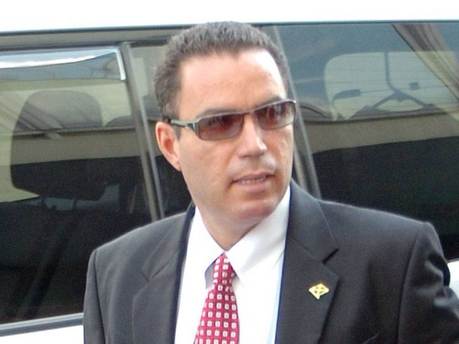
Vaz says enough
After 27 years MP addresses Dianne Smith murder rumours
Sunday, March 31, 2013
FROM the grave of an innocent schoolgirl, on this Easter Sunday, comes a cry for justice against those responsible for the spilling of her blood.
But Dianne Smith cries from the after-life, not just for herself, for she knows that there is one other whose innocence has also been stolen and whose crucifixion was equally undeserved.
For 27 years, Daryl Wesley Vaz has been locked up in a prison of pain and hurt, dogged through every phase of his life by the nastiest of orchestrated rumours that, among other things, he raped and murdered Smith, a student of the Immaculate Conception High School.
Smith was on her way to school along Old Stony Hill Road on May 4, 1983 when she was raped, stabbed, strangled and her body dumped in a gully.
In a sense, Dianne Smith’s misery is over. Her lithe 14-year-old body, battered and bruised and robbed of life, is forever beyond the pale of human cruelty.
But for Daryl Vaz the misery lingers on. And it is never more painful than when he must admit to himself that — forget opponents, political and otherwise — even among party colleagues, with whom he must eat, drink and share political thought, this dreadful treachery is perpetrated. No doubt for personal and political agendas.
Yet, he draws deep consolation from a reassuring call from then Opposition Leader Michael Manley in 1986 who, “speaking as a father myself”, condemned the graffiti and accusation hurled from a political campaign at Birdsucker Lane, Barbican, St Andrew.
“He called first my father (Douglas Vaz) and then me to apologise. I have always accepted that apology as genuine and not as if he were calling to accept his party’s responsibility,” said Vaz, his face now a mask of gratitude and emotion.
Vaz is not the first and is unlikely to be the last to be wrongly accused of a crime he did not commit. The question that might never be answered is why was he targeted in the first place.
The accusation first surfaced in 1986, three years after the murder. His name never came up during the intense police investigations that followed, neither was it mentioned even once in the 1984 court trial of the two men accused of the murder.
“There is absolutely no evidence to connect him (Vaz) to the case,” said Retired Assistant Commissioner of Police Isadore ‘Dick’ Hibbert, the top detective who helped to lead the investigations 30 years ago.
“In fact, his name was never called at any time during the intense investigations started in 1983 and I am very puzzled as to why he was subsequently associated with this murder,” Hibbert told the Sunday Observer. “Whenever we were investigating a case, we looked into everything, including rumours, to find leads. The name Daryl Vaz just didn’t come up at all.”
Convinced that he could not be his own best defender, Vaz has carried the burden, maintained silence, toughing it out but always knowing that it could not be easy for his wife, children, other family members and close friends.
In a 2009 interview on the hustings, his obviously inlove wife, Ann-Marie Vaz, told a newspaper reporter that politics had damaged their marriage.
“It’s been exhausting for me as a wife and mother. To see what my husband has been through to prove his passion for the constituency has been emotionally draining,” she told writer Howard Campbell. “I never wanted anything to do with politics. It caused a lot of damage to our marriage initially.
“…I’ve always known of his persona and things that people said. Those are things I won’t get into,” she added.
Friends and supporters of the West Portland member of parliament have started to ask Vaz why has he broken his silence now and are questioning the motive for the resurgence of the rumour. Why not let this terrible thing remain in the grave where it belongs?
“Even Nelson Mandela got justice after 27 years. It’s my time now,” Vaz insisted.
The issue resurrected itself last week in a rather innocuous way, in a popular weekly feature titled ‘Crimes that rocked the nation’, written for the Sunday Observer by Sybil Hibbert, the veteran journalist and Jamaica’s greatest court reporter. She is also the wife of Retired ACP Hibbert, himself rated among the island’s top detectives of his time and, importantly, who investigated the Dianne Smith rape/murder case.
Mrs Hibbert, now in her 70s, and whose name is highly respected in the legal fraternity here, wrote: “Before dealing with the evidence that unfolded before the Home Circuit Court in this case, let me state categorically that the rumour noised abroad about the politician (Daryl Vaz), now member of parliament, being connected with, or having anything to do with this murder, is absolutely untrue.
“Apart from the fact that this politician’s name was never mentioned in the proceedings, my husband Isadore Hibbert, was one of the detectives investigating this murder. The most thorough police investigations revealed no such connections; he was early on the scene and confirms this. Besides, after spending 40 years and seven months in the Jamaica Constabulary Force, he retired with an unblemished record after acting as (high as) deputy commissioner in charge of crime for two years…”
If Vaz had wanted to maintain his silence, he could no longer. The article brought out his enemies, some internal and external, he said. In a spate of cruel e-mails ignoring the facts as stated by the lead investigator, they again accused him of the murder.
One of the e-mail authors who has been most persistent and uses the pseudonym “Anecia Brown” wrote: “All members of Jamaica media who know of the connection of Daryl Vaz to Dianne Smith murder please contact City Desk at 306-657-6442 or 306-657-6258.”
The e-mail was sent to all the media houses and individuals including Abe Dabdoub; A Creary; A J Nicholson, the foreign minister; Peter Bunting, the national security minister; and Mark Golding, justice minister.
The phone numbers when called by media houses turned out to be those of a Canadian newspaper, The Saskatoon StarPhoenix.
Responding to the Sunday Observer’s query about the e-mail, Managing Editor Heather Persson said: “No such person (Anecia Brown) works for The Saskatoon StarPhoenix and the newsroom had nothing to do with that e-mail.”
Vaz, as he has always done in face of adversity, pledged to do everything to find the truth, even after 27 years, and unmask the authors of the emails and bring them to justice, not just for himself but for others who have suffered similar attacks upon their reputation.
If there is any doubt about his seriousness, one only has to recall that he has an unrelated case in a Florida court in which he accused Jamaican-born Miami attorney David Rowe of being behind an e-mail which libelled him, former prime ministers P J Patterson and Bruce Golding, Christopher Tufton and Gordon ‘Butch’’ Stewart, among others. Rowe denied the allegations.
Born on December 15, 1963, Daryl Wesley Philip Vaz is a man of destiny. He has had to prove himself every step of the way and be ready to roll with the punches. It’s what he’s now very good at and what he’s done all his controversial life.
One of his most painful bouts has been the dual citizenship debacle against the PNP’s Abe Dabdoub, who dragged him before the courts trying to unseat him from the West Portland constituency on grounds that by being a United States citizen, Vaz couldn’t constitutionally sit in the Jamaican Parliament.
In the ensuing by-election ordered by Chief Justice Zaila McCalla, Vaz not only won but increased his victory margin.
Read more: http://www.jamaicaobserver.com/news/Vaz-says-enough#ixzz2P9N91WvV
THE DEATH OF DIANE SMITH- SHORTY’S STORY
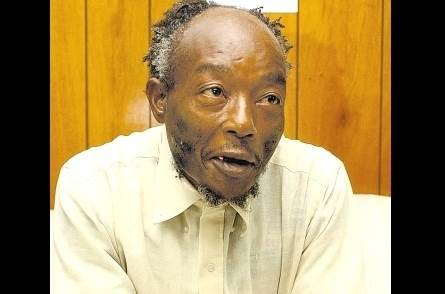
Accused and tried for Diane Smith’s murder; Shorty’s story
Sunday, March 31, 2013
For years it was rumoured that Dennis ‘Shorty’ Jenkins — the man who was charged with the rape and murder of Diane Smith — was shipped off to the USA after his acquittal and then killed. In 2003, then Jamaica Observer writer Pat Roxborough-Wright (now deceased) found Jenkins and interviewed him. Here is a reprint of the story, headlined ‘Shorty alive and well’, as it appeared in the February 9, 2003 edition of the Sunday Observer.
Dennis ‘Shorty’ Jenkins telling his story to the Observer in February 2003.
1/1
Dennis ‘Shorty’ Jenkins was killed almost 20 years ago in the United States, stuffed into a barrel and shipped back to Jamaica within months of being acquitted of the murder of Diane Smith, a student of the Immaculate Conception High School for girls.
That, for many Jamaicans, was the closing chapter of one of the most sensational and widely publicised murder mysteries, as a dead Shorty could tell no tales about who really raped, stabbed and strangled the schoolgirl on May 4, 1983.
Where that rumour came from is anyone’s guess. Defence attorney Earl Witter said he first heard it at a party in New York in 1985, months after the trial. Several other people said they just, well, heard and accepted it.
But Jenkins, who, apart from a splinter in his left foot, enjoys good health at the age of 52, has never held a passport much more a visa, never left Jamaica and, based on what he told the Sunday Observer last week, doesn’t have a clue who committed the crime.
“Furthest me ever go inna mi life is Palisadoes, follow mi family go airport,” he said, chuckling.
That was the opening line of a more than 60-minute storytelling session that brought his friend and lawyer, Bert Samuels, close to tears at points, but for the most part had his audience laughing.
Not that it was a particularly funny story — Jenkins spent two years and 10 days in jail between his arrest and acquittal — but as the diminutive man lost his initial shyness and got into the story with raw, frank and colourful ruralness, it became impossible to keep a straight face.
Take his rebuttal of the gonorrhoea label.
Samuels had been struggling to find a polite way of making the point that the bacteria which led the prosecution’s forensic expert to say that Jenkins had the venereal disease was actually gonnococus, the bacteria that gives rise to the disease.
Midway through his explanation, though, Shorty took the reins.
“What happen is that me neva bathe fi ’bout three days when them arrest me and me never get fi use the bathroom so you know the custard that form ‘roun mi hood drum (tip of the penis), dem say that was the gonorrhoea. But when me hear dem say it inna court mi jump up and ask how come mi private nuh rotten off, mi nuh have no gonorrhoea, me nuh go doctor from the time mi inna prison, so how me hood nuh rotten yet.”
And he was right, Samuels concluded.
“We asked a doctor and he confirmed that if Shorty really had gonorrhoea he would have suffered damage to that area if it had gone untreated for that time,” he said.
By then, Jenkins had taken charge of the conversation. The gonorrhoea wasn’t the only issue he wanted to talk about on the nostalgic trip back to the day he was arrested. There was the confession he swore he never made to his cell-mates, the pubic hairs that were taken from him in the attempt to produce evidence linking him to the crime, the disruption to his life caused by the episode, the shame, the abuse, the scorn he had to endure before being acquitted by a 12-member jury at the end of a retrial that lasted over two weeks.
The frightening thing about the story as Jenkins told it, is that it could have happened to anyone who had been in what turned out to be the wrong place at the wrong time.
There were no eyewitnesses and, as it turned out, no reliable evidence linking Jenkins or his co-accused, Leroy Wallen, a 35-year-old bus baggageman, to the crime.
Wallen was released at the end of a no-case submission by his lawyers Jack Hines and Hensley Williams, who in turn, teamed up with Jenkins’ lawyers.
Shorty’s defence was that on the morning of the murder he had made his customary trip to the ackee walk in Constant Spring, picked a bag of the fruit, sold it to a Rastafarian, and went home to babysit his sister’s four children — two girls and two boys.
In the evening, on his way home, he stopped to rest by an old car in Constant Spring. “A man ask mi ’bout him pig dem an me tell him mi neva see them. He ask me if me hear what happen to the schoolgirl. Me say no,” recalled Jenkins.
Before he knew what was happening, the police had locked him up.
“Dem lock me up wid some prisoner and dem almost murder me in deh. Seh mi a wicked bwoy because look what me do the nice, nice girl. Next ting when the police come dem draw a card pan me and tell police seh me seh me see the dead girl inna di gully and sex the body. But nutten neva go so, me neva seh so,” he told the Sunday Observer.
“It wasn’t just Shorty on trial,” said Witter, who led Jenkins’ defence team at Samuels’ invitation. “It was the entire justice system.”
And if ever there was a case to bolster the argument that the justice system can work independently of financial and social clout, it was Jenkins’ murder trial.
For Jenkins — a poor 34-year-old man, who, after a year-and-a-half of being unable to find work in the construction industry, began to pick and sell ackees for a living — didn’t have the first dollar with which to fund a defence team. He had to rely on legal aid and the efforts of Samuels, who was just three years out of law school.
“I had known Shorty since I was 14,” said Samuels. “His sister used to work with my mother. We lived within minutes of each other. So when this thing happened, they came to me for help.”
With the help of K D Knight, the lawyer-turned-politician, Samuels managed to convince just one of the 11 jurors — a woman — that Jenkins was not the rapist/murderer. That paved the way for the retrial, which saw Witter leading Samuels, his sister, Jackie Samuels-Brown, Hines, and Williams in Jenkins’ defence.
It was a close call, but Jenkins, who told the Sunday Observer that he had never imagined going to the gallows for a crime he knew he didn’t commit, didn’t seem worried.
“Me tell them not to worry, we will appeal if we lose the case because it wasn’t me,” he said. “The only thing I was afraid of was the locking up.”
His simplistic confidence frightened the defence team, which understood only too well the dangerous implications that the case’s massive publicity held for Jenkins.
“Here you had the whole country calling for Shorty’s blood. Literally, the mood was similar to what obtained in America at the time when schools were being desegregated,” said Samuels.
“There was a lot of anger, hatred and violence directed at Shorty and us too. When we were walking to the courthouse there were people on every side screaming at us to bring Shorty. One woman said, ‘gi him to we mek we rip him up and nyam him’… once Shorty’s mother came to the courthouse. It was the first and last time. Somebody pointed her out and the crowd attacked. I had to whisk her off into a taxi with the help of a policeman. This was the background against which Shorty was expressing confidence.”
“You’d have to be there to understand,” said Witter. “Shorty had this way of smiling as if his innocence was enough. We had to be telling him for his own safety, not to infuriate people by waving from the paddy wagon and that sort of thing.”
In an attempt to ensure that Shorty got a fair trial, the lawyers applied for a change of venue. But nothing, including the near mauling of Jenkins’ mother, could convince the judges of the day to move the trial. It took place at the Supreme Court inspite of the jeering mob that followed the proceedings from start to finish.
The day of the verdict was a momentous one for Jenkins.
“The morning I get up and pick some ackee down by GP to show people what really happened. I am a fruit picker. I walk with the ackee, that I am innocent,” he said.
If Jenkins had been privy to what went on in the jury room where his fate was decided, he may have been a tad less confident. “It was an even split at the beginning of the deliberations, six said guilty, six said not guilty,” Samuels told the Sunday Observer. “That’s what the forewoman told us after the trial.”
According to the forewoman, a well-to-do white woman who didn’t fit any of the criteria which the defence team had used to poll the jury with a view to eliminating persons of demonstrable or potential bias, not one of the six who instinctively wrote ‘guilty’ could spell the word correctly. The others who vouched for Shorty’s innocence were the more educated of the lot.
It was a far more tumultuous day for his lawyers. “I couldn’t help myself. I cried when the verdict came in,” said Samuels.
For Witter, who still had to be looking out for Jenkins in the immediate aftermath of the verdict — he was put in the lock-up even after the judge, UD Gordon, said he could go — the tears came months later in the year while dining at the Trade Winds Restaurant in downtown Kingston.
“I was sitting there, having lunch when I looked up. There was Shorty with a breadfruit in one hand and a bunch of bananas in the other. ‘This is for you, Mr Witter. Thanks,’ he said. It was the nearest I came to receiving any sort of pay for doing the trial. Nearly couldn’t finish the meal,” he said.
When Jenkins revels in the memories, however, he is full of smiles.
To him, David Nippez, the expert who confounded the opinions of Yvonne Cruickshank, the Government’s forensic analyst whose evidence, if accepted by the jury, would have sent him to the gallows, is remembered as ‘the white man’.
Defence attorney Winston Spaulding, the then attorney-general who helped the defence team procure the service of Nippez, is remembered in name only.
Director of Public Prosecutions Kent Pantry, then a prosecutor in the department, is remembered vaguely as a clear-skinned man who said “whole heap a things”.
Knight is remembered as the nice, quiet man who “musi did vex when di people never answer the verdict fi the first trial and go tek up politics”.
He remembers the other lawyers and would like to tell them thanks, only he doesn’t know how to contact them. All that’s left of the affair is a very entertaining story and the idlest of hopes that compensation, in the form of, say, a million dollars or even half of that, may come in somehow so that he can build a small house and a shop.
Read more: http://www.jamaicaobserver.com/news/Accused-and-tried-for-Diane-Smith-s-murder–Shorty-s-story_13977720#ixzz2P8VuAcJO
HMMM- MARRIED FOR GREENCARD THEN …………..?
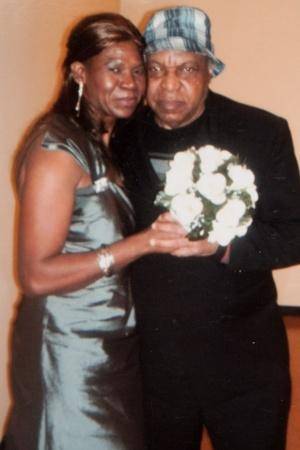
A Jamaican nurse married one of her patients to get a green card — then hastened his death to get his $1.5 million Brooklyn properties, the man’s family charges in a stunning lawsuit.
Relatives of Garth Lewis, 67, claim that his marriage to caregiver Janet Lloyd was nothing but a sham — and that she “was directly responsible” for the diabetes-stricken man’s death because she didn’t care for him properly, according to court papers.
Lloyd, a 47-year-old mother of five, denied the allegations, telling The Post, “I did not cause my husband’s death, and the doctors know that.”
The family brought their concerns to the Brooklyn District Attorney’s Office. A source said the case was referred to federal immigration authorities.
Lewis, of Flatbush, died Feb. 26 of a heart attack. He and Lloyd had been married for a year.
Lewis’ death, his family charges, “was premature and orchestrated by [Lloyd], whose sole purposes were to marry [Lewis] in order to obtain her green card and to deplete his assets,” according to the lawsuit.
Lloyd “never acted as, nor was, a wife in reality to [Lewis],” the relatives claim.
The marriage was real, Lloyd insisted — even showing a Post staffer a photo of her and Lewis engaged in a sex act to prove it.
“They said our relationship wasn’t intimate. Does this look intimate to you?” she fumed.
Her dead husband’s relatives accuse Lloyd of causing not just Garth Lewis’ death, but her first husband’s as well.
Lloyd’s first husband “also died under similar, very questionable circumstances,” Lewis’ family claims in Brooklyn Supreme Court papers.
Lloyd claims her first husband was a cop who was murdered in her native Jamaica while she was living in the United States.
Lewis’ mother, Eileen, and cousin, Shirley Cleardawn-Lewis, are fighting Lloyd’s efforts to have Lewis cremated because the family “strongly believes that preventing cremation is critical to determine the cause of [Lewis’] death and to prevent other men from experiencing the same fate,” according to court documents.
“The nature of [Lloyd’s] profession — nursing — provides her access to knowledge of ending a life based upon the diseases being untreated and the proper medication not properly administered,” the relatives allege in the lawsuit.
Lewis and Lloyd had met when she became his nurse, his family said.
“He needed particular medical care; he needed to be fed properly and at certain definite times during the day. [Lloyd] did not properly administer the necessary treatment,” the lawsuit alleges.
Neighbors allegedly exposed Lloyd’s poor treatment of Lewis and alerted his family, the relatives claim in court papers.
Lloyd insisted the shocking allegations are nothing more than a money grab by her dead husband’s relatives, who want to take over the three residential Brooklyn buildings he owned.
Public records show the buildings have a market value of about a half-million dollars each.
“They are crazy,” Lloyd said, crying. “I didn’t take care of my husband?”
Lloyd said her cousin had introduced her to Lewis.
“When I met him, I was married, so we couldn’t have a relationship,” she said.
She was about to return to Jamaica for good, Lloyd said, when Lewis begged her to stay.
“He said, ‘Janet, stay,’ and I said, ‘How can I stay in America?’ He said, ‘Marry me,’ ” she recalled.
[email protected]
BUSY SIGNAL, AN UNGRATEFUL INVESTMENT?

Shane Brown, Busy Signal split begs the question
Davina Henry, Staff Reporter
Coming on the heels of the Busy Signal and Shane Brown split, the consensus among managers is that artistes are sometimes ungrateful.
After managing Busy Signal’s career from 2007, it came as a surprise to Brown when he was axed by the artiste.
To make matters worse, Brown says he was not told by Busy Signal that he was no longer needed. Busy had, instead, instructed his brother to deliver the message.
“Busy Signal is ungrateful. When you look at where we took Busy Signal’s career from – out of the dirt – and we made his brand a more polished brand. He is ungrateful. Busy’s situation is also very unique because when he was arrested and taken abroad, I took six months off and did nothing else so that Busy could return to Jamaica. I invested in him personally, because I owed it to him as his manager and friend to get him back to Jamaica. Busy Signal is doing interviews, saying that Shane Brown is the best. Him a behave like nutt’n nuh happen, like him is a mad man,” Brown said.
With reports surfacing that there was no written contract between them, Brown stated that the verbal agreement they had was legally binding in court.
“I did management studies and part of that is law. My lawyers can tell you how mi stay. I am not a careless person. We had a verbal agreement that is public knowledge. That stands in the court of law. My lawyer already gave him a memorandum of understanding, which he has signed,” Brown said.
When questioned whether he would ever manage Busy Signal’s career again, or even work with the artiste, Brown said, “I don’t go back. I go forward positively.”
“Busy’s brothers have no affiliation with the business. They are not musically inclined. They seek advice from me, and I give it to them. Busy gone Europe and they were asking my advice on things, and I helped them same way,” Brown said.
For him, the business of music is a spiritual one where a connection has to be made.

Busy’s brother
“Music is very spiritual. I don’t produce people because dem a run di place. If me and somebody not connected like that, then mi cyaah work wid you.”
Though many believe that contracts are the best option, Brown states that contracts will not stop artistes from being ungrateful. “Contractual agreement don’t bar ungratefulness,” he said.
But while Brown believes that verbal agreements can sometimes work in the favour of the manager, Donovan Germain begs to differ.
Germain, the CEO of Penthouse Studios, has managed several artistes over the years, including Buju Banton (who Germain had more Jamaican number-one singles with than any other artiste), Mad Cobra, Cutty Ranks, Morgan Heritage, Wayne Wonder, and Beres Hammond.
“Artistes are ungrateful. But one of the problems is that we are a bit too informal. We need to have iron-clad agreements with artistes that include residuals after they part ways. Dem cyaah just kick you to the curb and gone ’bout dem business with no recourse. When you have these contracts, it mean say when dem ready to leave, they know the ramifications of what they are doing,” Germain said.
He went on to say that when artistes feel they have ‘made it’, in their eyes, the value of the manager begins to diminish.
“These artistes don’t understand that their success involves the engineer, the producer, the background vocals, etc. Dem think is dem alone achieve the success.”
‘LOST’ ARTISTES
Although he would not comment on whether he believes Buju Banton’s career has bettered since he left Penthouse, Germain believes that many artistes who have left their original managers have lost their way.
“I won’t be judgmental on Buju’s career because I don’t have the sales of what he did after he left Penthouse, but I know that every single artiste that leaves their original managers, dem career just pitter down to nothing. All the statistics is there to collaborate what I am saying,” Germain told The Sunday Gleaner.
Germain admits that he has no qualms with artistes wanting to move on, as long as they do so in a professional manner.
“Buju Banton wanted to leave and form his own company. I don’t have a problem with people moving on. The problem is when they end up maligning you to make you look bad. After a while, the artistes don’t want to pay the 20 per cent, so dem will get a friend, or dem brother, to manage them because they don’t have to pay these people because of the ‘personal-ness’ of the relationship. Move on if you want to move on, but don’t diminish people’s value in the process,” said Germain.
Reggae artiste Marcia Griffiths also sided with the managers. According to her, some artistes are indeed ungrateful.
“Whether they are conscious of the fact that they are or not, ungrateful is ungrateful. In this time and age, it is hard to find a good manager and person that you can trust and work with … . Managers need to have agreements with artistes because no one knows what tomorrow may bring.
“A lot of artistes get carried away and do some foolish things because they think they have arrived and that they have made it. I always say the same mouth that says ‘hooray’ says ‘go away’. Most of these experiences never work out in favour of the artistes,” Griffiths said.
Clifton ‘Specialist’ Dillon, who has managed several artistes, including Patra and Shabba Ranks, over the course of his career, also said that artistes should indeed respect the person who brings their careers forward.
NO RESPECT
“Ungrateful is a very strong word. These artistes should respect the past to assure the future. If you want to go, then go. Some artistes want to manage themselves, but that is where they damage themselves. They don’t understand how much energy, time and money was spent to put their careers where it is now. I don’t know ’bout anybody else, but when artistes leave, dem haffi pay me,” Specialist said.
When asked if he believes that Shabba Ranks and Patra’s careers had blossomed since leaving his camp, Specialist replied:
“Find dem first, where are they now? When they were with me, they were on top of Billboard charts, but now, you don’t even see them on a billboard on a light post. Does that tell you something?”
Specialist also told The Sunday Gleaner that there are several solutions that managers can put in place to secure themselves. These include making sure that there is paperwork in place, and being careful of who they decide to manage.
“If you manage the wrong person, you can cause damage to yourself as a manager,” he said.
Specialist went on to say he would never manage Shabba Ranks and Patra again but that if they wanted a good word of advice, he would give it to them so that they wouldn’t make the same mistakes.
“If I could say something to Shabba and Patra, I would tell them that I wish them all the best, may God keep them safe, and good luck in their careers. A song for them to listen to is Cheerleader by Omi. That shows that I am still relevant. They can also listen to Kingston Town by my artiste Alborosie. He’s always touring. Check the YouTube views, too. I’m out,” Specialist said.
****RULES**** 1. Debates and rebuttals are allowed but disrespectful curse-outs will prompt immediate BAN 2. Children are never to be discussed in a negative way 3. Personal information eg. workplace, status, home address are never to be posted in comments. 4. All are welcome but please exercise discretion when posting your comments , do not say anything about someone you wouldnt like to be said about you. 5. Do not deliberately LIE on someone here or send in any information based on your own personal vendetta. 6. If your picture was taken from a prio site eg. fimiyaad etc and posted on JMG, you cannot request its removal. 7. If you dont like this forum, please do not whine and wear us out, do yourself the favor of closing the screen- Thanks! . To send in a story send your email to :- [email protected]
Recent Comments