
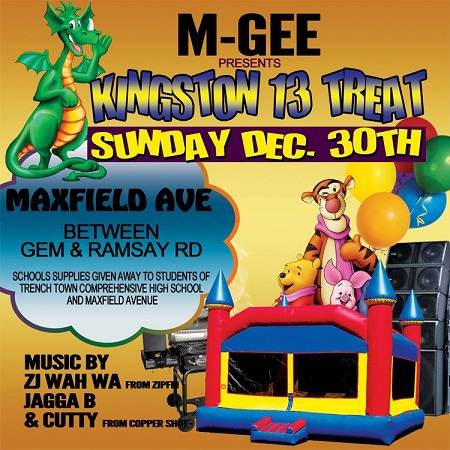
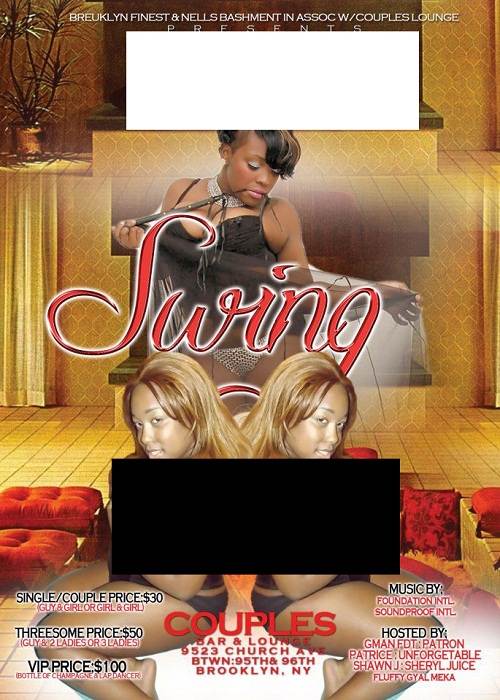
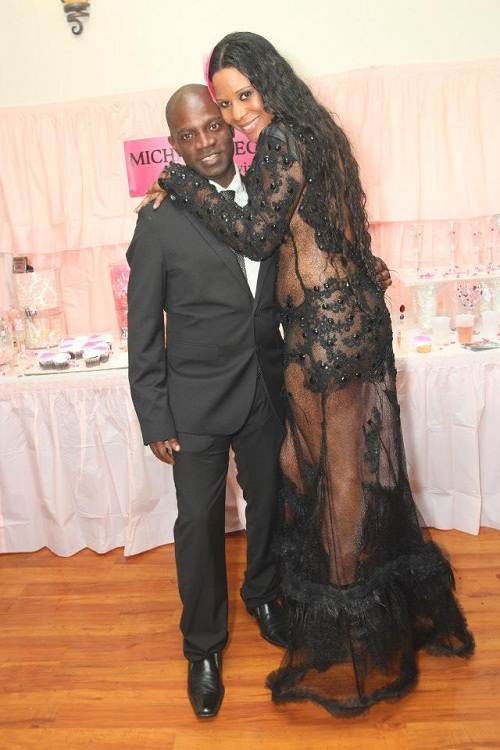
FILL IN DI OBVIOUS PLEASE
IRON MAN THE PPL THEM WAAN KNO IF YOU STILL WORKING AND WHY ALL OF A SUDDEN YOU START PARTY BACK AGAIN FI A WATCH PEARL COCKY???

WTF AFRICA- MAN RUNS OVER GIRLFRIEND BECAUSE SHE REFUSED TO TAKE HIM BACK

A business man has reportedly raped and run over his ex-girlfriend a Uni student, severing her arm while trying to chase her.
Sources revealed that the girl who is currently at one of the local hospitals, had been having an affair with the married business man who owns a resort for the last 9 months, and recently decided to break things off with him, as she had met someone new.
He apparently was devastated but began pressuring her to take him back, which she declined to do, on the fateful day she met him at a private location in, and he began to try to talk her into taking him back and having sex with him, she refused and told him that it was over and tried to leave, it was then that he became violent and aggressive, seized the keys to the car which he had bought for her, and demanded all the money and gifts he had showered on her back.
When she could not give them back, he beat her and raped her violently several times saying “this is for all the money I spent on your ungrateful gold digging stupid ass”, now seriously fearing for her safety the girl took off on foot, even abandoning the car her he had given her while he was in the Bathroom.
The man returned to find her gone, then chased her down with his car, demanding that she get back in the car with him, and in the chase he ultimately ended up knocking her down with his car, sadly he ran over her arm with his car as he knocked her down and sadly young lady lost her arm in the accident, and has multiple injuries to her body, but is recovering in hospital.
The young girl who was the envy of her classmates, lived in a smart Townhouse, was a smart dresser, and had a nice set of wheels, jewellery, Ipad, Blackberry phone, etc all courtesy of guys she was dating when the going was good, but apparently had recently “upgraded” herself and was also secretly dating a much older Politician who she felt with the upcoming election would be in a very powerful spot come 2013, never mind the politician is married with grown up Children older than this girl.
However rumours are she was also dating several rich older men at the same time “There were always flashy cars parked outside her house at awkward hours of the day” a neighbour said, “We used to wonder who these people were, because nobody has that many older Uncles” he added “ we knew there was something going on, as most of the men who came to visit her were White men” he concluded “perhaps she used some JUJU to charm them? Cos it was like a car show here” he joked.
Friends have also been stunned, but some boys have said “She was a known gold digger like most girls in town who claim to be models, and should have given him back all the money she took from him” another said “When we tell these silly Uni girls to stick with us they say we are too small for them and we cannot afford them now look” and “this is not the first time they have met violent ends to relationships” another added. “They mainly go for any Older White guys who they see as rich, and think there is no consequence to their actions and Chop his money just like that” a Girl also said.
You might also like:
ARE THERE ANY LOST BOOKS IN THE BIBLE- GOOD MORNING
Aren’t some of the books of the Bible lost, left out, or missing?
Another fairly common misconception about the Bible is that it is in some way incomplete, i.e., that it has books missing. The 66 books that compose the modern Bible are known as the “canon,” a theological word that means, “the books of the Bible officially accepted as Holy Scripture.” Some doubters of the Bible think church councils constructed the Bible by arbitrarily choosing the books they thought should be included. Furthermore, these people often assert there are many other books that should be in the Bible. These are sometimes referred to as the “lost books” of the Bible.
Before addressing the issue of whether or not any God-breathed books were left out of the Bible, I would like to make a personal observation. In my years in the ministry I have had the opportunity to personally speak with perhaps twenty people who subscribe to the theory that there are lost books of the Bible, and I have noticed something interesting: those who criticize the Bible by claiming it is incomplete do not conduct their lives according to the books that are included in the Bible. This is hypocritical because if the Bible is missing books, then the parts we do have become even more valuable. If pirates have most of a treasure map, they do not throw it out because it is missing a piece. Instead, the part they have becomes even more valuable, and they study it with great intensity. Critics of the canon do not live by the books that are included in Scripture. Almost without exception they use the theory of the “missing books” to ignore the Bible altogether. It is clear to me they are not trying to restore a faulty document. Instead, they are looking for an excuse to ignore the Bible, and they find that excuse by questioning the canon.
The Church did not “create” the canon as the critics assert; rather, they recognized it. From the time God first spoke His Word to people and told them to write it down, there have been other writings that were not “God-breathed.” There were enough books circulating in the ancient world that Ecclesiastes, which was written more than 900 years before Christ, says, “…Of making many books there is no end…” (Eccles. 12:12). Some of the books existing in biblical times contained material substantiating Scripture. A few of these are mentioned in the Bible, including, “…the book of the annals of Solomon” (1 Kings 11:41b), “…the annotations of the prophet Iddo” (2 Chron. 13:22b), and “…the annals of Jehu…” (2 Chron. 20:34b). Even though these books are mentioned in the Bible, and supported it, they are still not “God-breathed,” and are left out of the canon. They are lost to us today precisely because the people of the time knew they were not “God-breathed,” so they did not carefully preserve them and pass them down from generation to generation as they did with what they recognized to be the God-breathed Word.
Before “books” were invented, Scripture was kept on scrolls, pieces of rolled up parchment or leather. Scrolls existed centuries before what we today call a “book,” which is a number of pages bound together on one side. Book format came into common use around the time of the writing of the New Testament. Since the pages could be written on both sides, paper was conserved, and books were easier to read from and carry than scrolls. Before the book format, the larger writings, or “books,” of the Bible (such as Genesis, Joshua, Jeremiah, etc.) were usually kept on individual scrolls, and it was customary to write several of the smaller books (such as Joel, Amos, Obadiah, etc.) on one scroll.
The fact that Scripture existed on scrolls has been used by people who criticize the canon. They try to make it seem as if all the scrolls of the Bible, as well as dozens of others, were just “floating around the Christian world” until some Church committee, hundreds of years after Christ, decided to put some of them together and make one official book. That is not what happened. By the time the individual books of the Bible were bound together as one book, they had been read, revered, loved, preserved, and recognized by generations of believers as truly being “the words of God.” In contrast, the non-canonical books were recognized in the community of believers as not being from the mouth of God.
God had the whole Bible in mind when He first told Moses to write His words on a scroll, translated “book” in most versions (Exod. 17:14). The writings of Moses were known as “…the Book of the Law of Moses…” (Josh. 8:31). The fact that the Law of Moses was recognized to be “the words of God” throughout Israel’s history, including the time of Christ, shows that the books recognized by the people were carefully preserved and handed down, not just as history or nice prose, but as the Word of God. The same was true for the psalms of David, the proverbs of Solomon, the prophecies of Isaiah and Jeremiah, etc. By the time Church councils undertook the task of compiling all the loose books into a single volume, those considered as “the Word of God” were well known and loved in the Christian community.
There are reliable tests that have been used to determine whether or not a book is a part of the canon, such as:
Was the book originally written by a confirmed prophet of God?
Does the message contain the truth of God?
Does it have in it the power of God to change a person’s life?
Was it accepted by the people of God? Those alive at the time the book was written were the best qualified to know and preserve it and pass it down.
There is a very good reason why Christians do not include the “lost books” in the Bible—they are not Holy Scripture. The people who wrote them were not accepted as “holy men of God” in their own generations, as were Moses, Samuel, and other biblical writers. Furthermore, reading and studying the non-canonical books shows they are not “God-breathed.” They were not accepted as the Word of God at the time they were written. They are full of historical inaccuracies, fanciful stories, outright falsehoods, and contradictions with the rest of the canon. Since the average Christian has probably heard of the “lost books” of the Bible, but more than likely has never read any selections from them, inserting a section here from one of the more popular apocryphal writings is appropriate. The following is an excerpt from the Infancy Gospel of Thomas:
1. I, Thomas the Israelite, tell and make known to you all, brethren from among the Gentiles, all the works of the childhood of our Lord Jesus Christ and his mighty deeds, which he did when he was born in our land. The beginning is as follows.
2. 1. When this boy Jesus was five years old he was playing at the ford of a brook, and he gathered together into pools the water that flowed by, and made it at once clean, and commanded it by his word alone. 2. He made soft clay and fashioned from it twelve sparrows. And it was the Sabbath when he did this. And there were also many other children playing with him. 3. Now when a certain Jew saw what Jesus was doing in his play on the Sabbath, he at once went and told his father Joseph: “See, your child is at the brook, and he has taken clay and fashioned twelve birds and has profaned the Sabbath.” 4. And when Joseph came to the place and saw (it), he cried out to him, saying: “Why do you do on the Sabbath what ought not to be done?” But Jesus clapped his hands and cried to the sparrows: “Off with you!” And the sparrows took flight and went away chirping. 5. The Jews were amazed when they saw this, and went away and told their elders what they had seen Jesus do.
3. 1. But the son of Annas the scribe was standing there with Joseph; and he took a branch of a willow and (with it) dispersed the water which Jesus had gathered together. 2. When Jesus saw what he had done he was enraged and said to him: “You insolent godless dunderhead, what harm did the pools and the water do to you? See, now you also shall wither like a tree and shall bear neither leaves nor root nor fruit.” 3. And immediately that lad withered up completely; and Jesus departed and went into Joseph’s house. But the parents of him that was withered took him away, bewailing his youth, and brought him to Joseph and reproached him: “What a child you have, who does such things.”
4. 1. After this again he went through the village, and a lad ran and knocked against his shoulder. Jesus was exasperated and said to him: “You shall not go further on your way,” and the child immediately fell down and died. But some, who saw what took place, said: “From where does this child spring, since his every word is an accomplished deed?” 2. And the parents of the dead child came to Joseph and blamed him and said: “Since you have such a child, you cannot dwell with us in the village; or else teach him to bless and not to curse. For he is slaying our children.”
5. 1. And Joseph called the child aside and admonished him saying: “Why do you do such things that these people (must) suffer and hate us and persecute us?” But Jesus replied: “I know that these words are not yours; nevertheless for your sake I will be silent. But they shall bear their punishment.” And immediately those who had accursed him became blind. [13]
Anyone familiar with the Four Gospels and the character of Jesus will realize immediately that the above “gospel” is not a part of the God-breathed Word, and certainly does not represent the love or wonderful heart of the Savior, Jesus Christ. That Jesus, even as a child, would kill another child who insulted him is completely out of character for Jesus, and that he would kill a second child who merely bumped into his shoulder is totally preposterous.
The “lost books” are also known for containing accounts of miracles that have no godly purpose or redeeming value, such as we saw above with Jesus and the sparrows. The “Gospel of Thomas,” and all the other non-canonical books have “fatal flaws” that reveal they are not the Word of God. As stated previously, there is a reason the “lost books” are not included in the canon of Scripture: generations of Christians and Christian scholars have read them and realized they did not come from God.
Another way God has kept His Word pure is by intertwining and cross-referencing the books of the Bible and the biblical characters. With the exception of the book of Esther, every single book of the Old Testament is either quoted or referred to in the New Testament. The phrase “It is written,” followed by a quotation or reference to the Old Testament occurs more than 60 times in the New Testament, and there are many other quotations that are not so specifically referenced. Also, in both the Old Testament and the New Testament many of the writers knew of each other and even referred to each other. Daniel and Ezra both mention Jeremiah; Ezra refers to Haggai and Zechariah; Nehemiah wrote about Ezra; Kings and Chronicles mention many of the prophets; Moses, Joshua, and Samuel are mentioned in many of the books; Job is mentioned in Ezekiel and James; Noah is mentioned in ten books besides Genesis; Peter wrote about Paul; Paul mentions Peter, Mark, and Luke; the book of Acts (written by Luke) mentions the apostles and Paul, and on and on. In contrast to this extensive cross-referencing system showing that the people of God knew of, loved, and respected each other, the non-canonical books are not crossed referenced in this way.
It is easy for the critic to say the Bible is an arbitrary collection of books. However, anyone who actually reads and studies the canon of Scripture will be able to conclude what thousands of scholars who are concerned about the purity of the Bible and the validity of the canon have discovered and rediscovered: the canon found in the modern protestant versions of the Bible, with 66 books from Genesis to Revelation, can be confidently trusted as “the Word of God.”
****RULES**** 1. Debates and rebuttals are allowed but disrespectful curse-outs will prompt immediate BAN 2. Children are never to be discussed in a negative way 3. Personal information eg. workplace, status, home address are never to be posted in comments. 4. All are welcome but please exercise discretion when posting your comments , do not say anything about someone you wouldnt like to be said about you. 5. Do not deliberately LIE on someone here or send in any information based on your own personal vendetta. 6. If your picture was taken from a prio site eg. fimiyaad etc and posted on JMG, you cannot request its removal. 7. If you dont like this forum, please do not whine and wear us out, do yourself the favor of closing the screen- Thanks! . To send in a story send your email to :- [email protected]
Recent Comments